Selecting a reliable Three Phase Isolation Transformer supplier in China requires more than comparing catalog prices. Buyers must examine engineering capability, manufacturing consistency, testing procedures, and after-sales support. A transformer may look impressive on paper, yet perform poorly under heat, voltage fluctuation, or continuous industrial loading. Real conditions matter.
This guide introduces ten notable Chinese suppliers for professional evaluation. The selection focuses on product range, production experience, technical documentation, quality controls, customization capacity, and export service. It also considers practical details, including copper winding quality, insulation systems, enclosure protection, noise levels, and cooling design. These factors can affect factory uptime and maintenance costs.
Not every supplier fits every project. That point is easy to miss. A data center may prioritize low noise and redundancy, while a machine-building plant may need rugged protection and flexible input voltages. Buyers should request test reports, efficiency data, temperature-rise results, and applicable certifications before signing contracts. Factory audits and sample inspections can reveal details that websites cannot show.
The ranking should be viewed as a practical starting point, not an absolute judgment. Supplier capabilities change, and public information may remain incomplete. Some manufacturers communicate better than they document. That does not automatically prove superior engineering. Direct technical discussions, reference checks, and independent verification remain valuable.
With this careful approach, the following supplier overview can help engineers, contractors, and purchasing teams compare options more clearly. Reliable decisions take evidence, patience, and a little healthy skepticism.
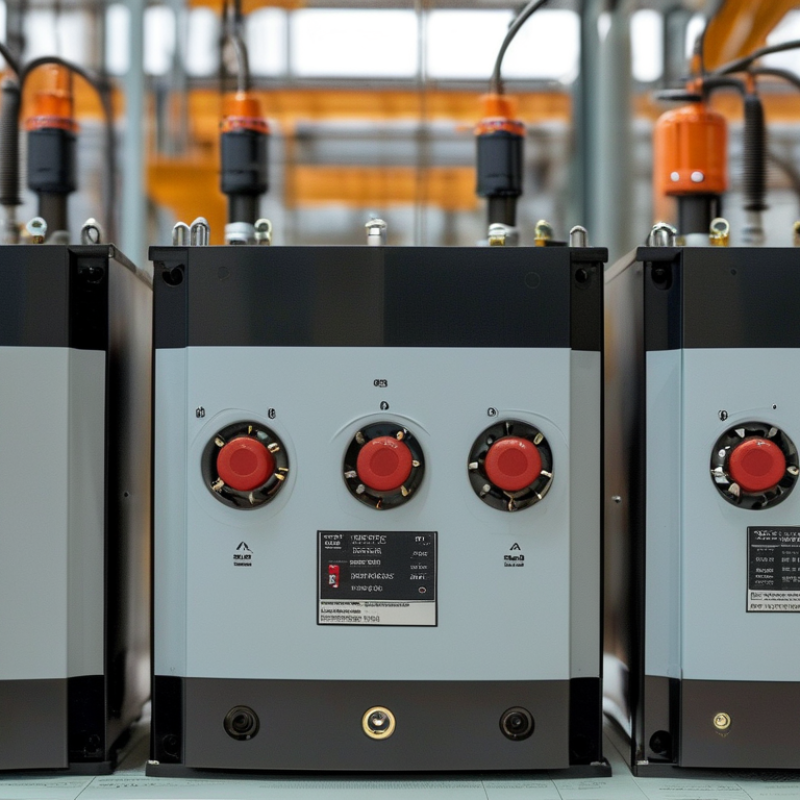
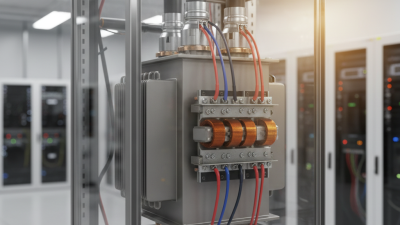
A three-phase isolation transformer transfers electrical power between windings without a direct conductive connection. This separation reduces common-mode noise, limits ground-loop interference, and improves safety around sensitive equipment. It uses three primary windings and three secondary windings, usually placed on a shared magnetic core. The output voltage may remain unchanged, or it may be stepped up or down.
The IEA Electricity 2024 report recorded 2.2% global electricity-demand growth in 2023. It also expects average annual growth of about 3.2% through 2026. More digital factories and data equipment require cleaner, better-controlled power. A transformer supplier should therefore provide insulation-class data, efficiency figures, temperature-rise results, and routine-test records. IEC 61558-2-4 is a useful reference for isolation-transformer safety. However, compliance claims need verification. A certificate alone does not prove consistent factory performance.
Tips: Check the kVA rating against real inrush current, not only the steady load. Confirm primary and secondary voltage, frequency, phase sequence, impedance, cooling method, and enclosure protection. Ask for a test report from the actual production unit. Do not rely only on a catalogue table. Noise can also matter; a quiet workshop may hide audible vibration under full load. For Chinese supplier comparisons, request sample wiring diagrams, material traceability, insulation resistance results, and service-response terms. Small details often reveal more than a polished website.
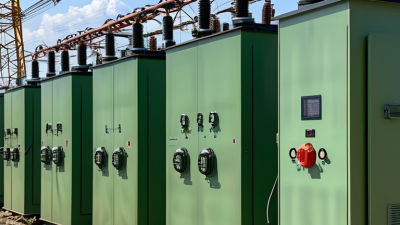
Evaluating Chinese three-phase isolation transformer suppliers requires more than comparing prices. Start with the transformer’s actual application: input voltage, output voltage, load profile, frequency, and required isolation level. Ask for temperature-rise data, insulation resistance, dielectric test results, efficiency curves, and noise measurements. A professional supplier should explain vector groups, grounding methods, shielding, and short-circuit tolerance in clear language.
Request drawings before placing an order. Check copper or aluminum conductor specifications, core material, enclosure protection, cooling design, and terminal layout. Factory experience matters. A useful visit should include winding areas, vacuum-pressure impregnation equipment, testing rooms, and serial-number traceability. Do not rely only on certificates. Verify issuing bodies, test scope, and whether the documents match the proposed model.
Look closely at quality control records. Can the supplier provide routine test reports for each unit and support a witnessed factory acceptance test? Ask how defects are handled, how replacement parts are stored, and who provides technical support after delivery. References from similar voltage and load conditions are more valuable than general testimonials.
Low prices can mislead. I have seen specifications become vague after a quotation is accepted. That deserves attention. A strong supplier welcomes detailed questions and records every change in writing. Still, even a careful audit may miss production pressure or subcontracting. Include inspection rights, delivery milestones, warranty terms, and measurable acceptance criteria in the contract. Be cautious, not cynical.
| Supplier Profile | Indicative Capacity Range | Typical Primary / Secondary Voltage | Frequency | Winding Material | Applicable Standards | Enclosure Options | Efficiency Target | Typical Lead Time | Quality Documentation | Evaluation Score |
|---|---|---|---|---|---|---|---|---|---|---|
| Supplier Profile 01 | 10–2,000 kVA | 380/400 V to 380/400 V; custom ratios available | 50/60 Hz | Copper or aluminum | IEC 61558-1; IEC 61558-2-4 | IP23 indoor; higher IP available | Up to 97.5% at rated load, subject to rating | 4–8 weeks | Routine test report, wiring diagram, nameplate drawing, insulation test data | 92/100 |
| Supplier Profile 02 | 5–1,600 kVA | 400 V to 400 V; 415 V options | 50/60 Hz | Copper standard; aluminum optional | IEC 61558-1; IEC 61558-2-4; IEC 60076 test practices where applicable | IP23–IP54 | Up to 97.2% at rated load, subject to rating | 5–9 weeks | Type-test summary, routine test report, material list, quality inspection plan | 90/100 |
| Supplier Profile 03 | 15–3,150 kVA | 380 V to 220/380 V; customized secondary voltage | 50 Hz standard; 60 Hz available | Copper or aluminum | IEC 61558-1; IEC 61558-2-4 | IP23 indoor; IP31–IP55 on request | Up to 98.0% for higher-capacity models | 6–10 weeks | Routine test report, temperature-rise data, bill of materials, packing record | 89/100 |
| Supplier Profile 04 | 10–1,000 kVA | 400 V to 230/400 V; dual-voltage designs available | 50/60 Hz | Copper | IEC 61558-1; IEC 61558-2-4 | IP20–IP54 | Up to 97.0% at rated load, subject to rating | 4–7 weeks | Routine test report, insulation resistance record, dimensional drawing | 87/100 |
| Supplier Profile 05 | 25–2,500 kVA | 415 V to 415 V; other ratios engineered to order | 50 Hz standard; 60 Hz available | Copper or aluminum | IEC 61558-1; IEC 61558-2-4; ISO 9001 quality system | IP23–IP55 | Up to 97.8% at rated load | 7–12 weeks | Factory acceptance test, routine test report, traceability records, inspection checklist | 86/100 |
| Supplier Profile 06 | 5–800 kVA | 380 V to 380 V; 220 V and 400 V options | 50/60 Hz | Copper standard | IEC 61558-1; IEC 61558-2-4 | IP20 indoor; IP23 standard | Up to 96.8% at rated load | 3–6 weeks | Routine test report, circuit diagram, inspection photos, packing list | 84/100 |
| Supplier Profile 07 | 10–1,250 kVA | 400 V to 230/400 V; isolation ratio configurable | 50/60 Hz | Copper or aluminum | IEC 61558-1; IEC 61558-2-4 | IP23–IP54 | Up to 97.1% at rated load | 5–8 weeks | Routine test report, design calculation, nameplate proof, outgoing inspection record | 83/100 |
| Supplier Profile 08 | 15–2,000 kVA | 380 V to 220/380 V; 400/415 V available | 50 Hz standard; 60 Hz optional | Copper | IEC 61558-1; IEC 61558-2-4; ISO 9001 quality system | IP23 indoor; outdoor enclosures available | Up to 97.4% at rated load | 6–10 weeks | Routine test report, raw-material certificate, temperature-rise record, inspection plan | 82/100 |
| Supplier Profile 09 | 3–500 kVA | 400 V to 400 V; low-voltage custom designs | 50/60 Hz | Copper or aluminum | IEC 61558-1; IEC 61558-2-4 | IP20–IP54 | Up to 96.5% at rated load | 3–6 weeks | Routine test report, dimensional drawing, insulation test record, packing documentation | 80/100 |
| Supplier Profile 10 | 10–1,600 kVA | 415 V to 415 V; 380 V and 400 V options | 50/60 Hz | Copper standard; aluminum optional | IEC 61558-1; IEC 61558-2-4 | IP23–IP55 | Up to 97.3% at rated load | 5–9 weeks | Routine test report, quality-control checklist, wiring diagram, product photographs | 79/100 |
Top 10 Three-Phase Isolation Transformer Suppliers in China
Finding the top ten three-phase isolation transformer suppliers in China requires more than comparing online catalogs. Experienced buyers inspect winding workmanship, insulation spacing, cooling design, and test records. A reliable supplier should explain voltage ratios, rated capacity, frequency, impedance, and permissible temperature rise clearly. For example, a 380V to 380V transformer may suit factory equipment, but the final choice depends on load behavior and local power conditions.
Strong manufacturers usually provide routine tests, insulation resistance results, withstand-voltage records, and measured no-load losses. Compliance with applicable IEC standards and a controlled quality system can improve confidence. Factory audits also reveal practical details, such as copper connections, cabinet protection, varnish treatment, and production cleanliness. Ask for traceable materials and clear warranty terms. Small details matter.
No list is perfect.
A polished website does not prove consistent production. I would request a sample inspection, recent test reports, and references from comparable industrial projects. Suppliers with engineering support can help calculate inrush current, harmonic effects, grounding arrangements, and enclosure requirements. Some factories may offer attractive prices but limited customization or slow technical responses. That weakness can become expensive during installation. The most dependable top-ten candidates combine stable manufacturing, responsive communication, documented testing, and realistic delivery schedules. Supplier evaluation should remain evidence-based, not driven only by rankings or promotional claims.
Common nominal three-phase voltage configurations used when specifying isolation transformers. Line-to-neutral voltage is calculated from the line-to-line voltage using VLN = VLL ÷ √3.
These reference voltages help buyers compare transformer input and output requirements without ranking individual companies or brands.
Certifications deserve careful checking. ISO 9001 supports controlled manufacturing processes, while IEC 61558 is relevant to transformer safety. Depending on the destination, CE, UL, or CCC compliance may apply.
A trustworthy supplier should provide current certificates, routine test reports, factory inspection records, and traceable serial numbers. Certification alone proves little if the tested model differs from the delivered unit. This detail is often missed.
Tips:
Request heat-rise results, winding material confirmation, and a complete nameplate drawing. Ask whether factory testing includes insulation resistance, dielectric strength, voltage ratio, and load testing. Confirm warranty coverage and spare-part response times before ordering. Visit the production line when possible. Photos can mislead. A perfect ranking is unlikely, because after-sales service varies by project and region. Some datasheets also omit losses at partial load, which can affect operating costs.
A China top-ten list is only a starting point for choosing a three-phase isolation transformer supplier. Your application comes first. Confirm primary and secondary voltage, kVA rating, frequency, vector group, impedance, insulation class, and required isolation level. Ask for routine and type-test records aligned with IEC 60076. These should cover winding resistance, ratio accuracy, dielectric strength, losses, temperature rise, and short-circuit performance. Fit matters.
Energy performance deserves equal attention. The IEA’s Electricity 2024 report projects global electricity demand to grow by about 3.3% annually through 2026. Even small transformer losses can become expensive in continuous industrial operation. Compare no-load and load losses at your real duty cycle, not only the nameplate rating. Request temperature-rise data, acoustic measurements, partial-discharge results, and material traceability. A factory audit can reveal winding workmanship, drying procedures, oil handling, and calibration control. ISO 9001 certification helps, but it does not replace product evidence. Not just paperwork.
Supplier reliability also includes engineering support, delivery discipline, spare-part access, and clear warranty limits. Require a drawing review before production and a witnessed factory acceptance test when the installation is critical. Check whether the supplier can adapt taps, enclosure protection, altitude, humidity, and non-linear loads. A spreadsheet can still mislead. I would also examine failure records and after-sales response times, even when the answers feel uncomfortable. The cheapest quotation may hide higher losses, weak documentation, or costly commissioning delays.